
From Radio Broadcaster to AI‑Powered Digital Media Platform
How a radio broadcaster built an AI‑powered digital media platform, transforming voice content into reusable digital assets and creating new advertising revenue opportunities.
Business Challenge
The radio broadcaster had built a strong audience through traditional broadcasting. However, much of its content still existed only as voice, making it difficult to preserve, organise, and develop into reusable digital assets.
Without a stronger digital foundation, the organisation had limited ability to apply AI, extend the value of its programmes, or build a clearer understanding of its audience.
The same limitation affected its advertising business. Campaigns remained centred on traditional radio, sponsorships, promotional activities, and offline events, with limited real‑time measurement, audience analysis, and post‑campaign reporting.
For brand owners, radio remained valuable for reach and credibility, but increasingly difficult to compare with digital media. Campaign performance was less visible, audience profiles were limited, and advertising products were often built around one‑off exposure rather than ongoing engagement.
The organisation wanted to answer three key questions:
Voice to Digital Assets
How can we turn voice‑based content into reusable digital assets?
Understand & Retain Audience
How can we better understand, retain, and re‑engage our audience?
Better Advertising Solutions
How can we offer brand owners more measurable, integrated, and commercially valuable advertising solutions?
The challenge was not simply moving radio content online. It was building the digital foundation needed to strengthen audience relationships, create better advertising products, and unlock new revenue opportunities.
Strategic Orientation
Awareness (知) → Workforce, Workflow & Automation (勢) → Intelligence & Decision Systems (謀)
We began by helping the organisation understand that its challenge was not simply a lack of digital channels. The deeper issue was that much of its programme content, audience activity, and campaign experience had never been captured as reusable digital assets.
Transforming Voice into Digital Content
Moving into Workforce, Workflow & Automation (勢), we redesigned the workflow around two connected flows.
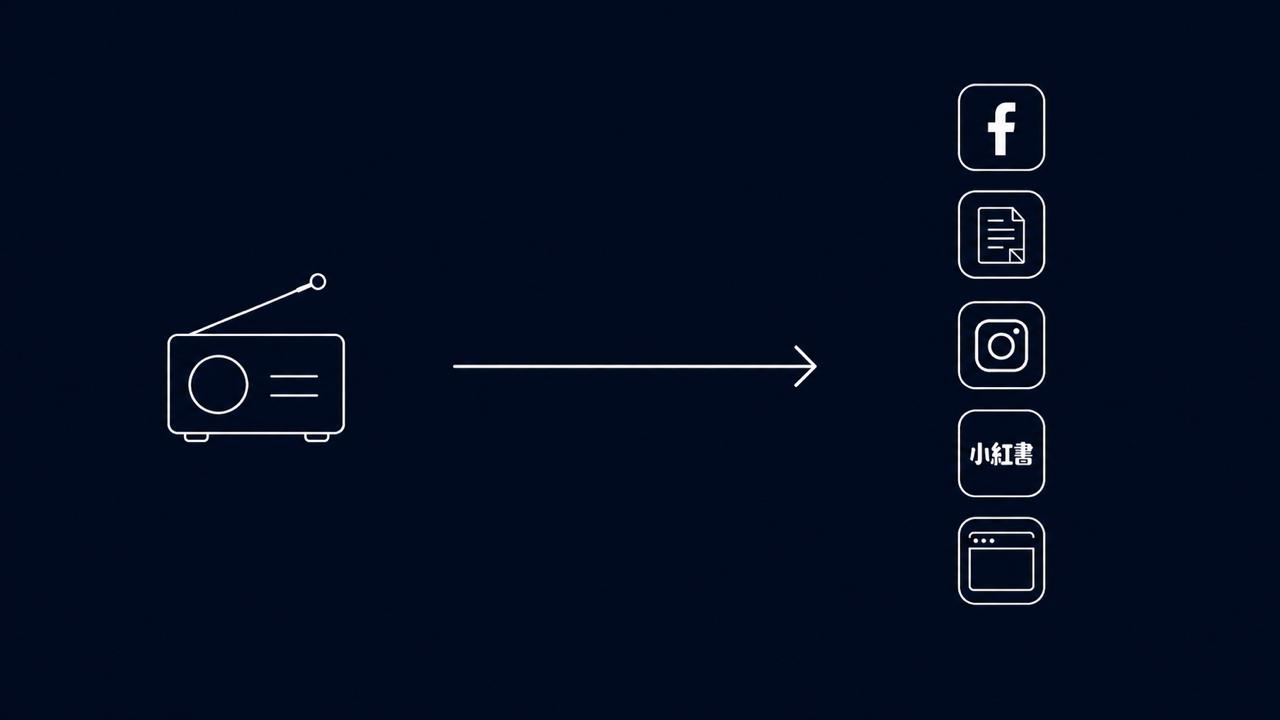
The first transformed voice‑based radio programmes into structured digital content. After each broadcast, the AI application converted the spoken content into text and generated articles, website content, mobile app content, and social media posts.
This allowed each programme to remain searchable, discoverable, and valuable long after the original broadcast had ended. Instead of reaching audiences only during a live programme or through an audio recording, the same content could continue to attract readers and listeners through websites, mobile apps, search engines, social media, and offline events.
This created a longer digital life for every programme and turned one‑time broadcasts into reusable digital assets.
Building Audience Intelligence
The second flow brought together website activity, mobile app activity, audience behaviour, and existing customer information. Automated analysis helped the organisation build a clearer understanding of who its audiences were, what content interested them, and how they responded to different campaigns across different channels.
These two flows created a continuous cycle. Content attracted and engaged audiences, audience activity strengthened the organisation’s digital assets, and those insights helped the broadcaster improve its content, customer relationships, and future campaigns.
Over time, these capabilities began to support Intelligence & Decision Systems (謀), helping the broadcaster better understand its audience, improve campaign performance, and make more informed advertising decisions.
The Transformation
The organisation evolved from a traditional broadcasting model into an AI‑powered digital media platform.
Today, every programme creates value beyond the original broadcast. The broadcaster can now:
- Transform voice‑based programmes into reusable digital assets automatically
- Extend the life and reach of every programme beyond the original broadcast
- Distribute content across radio, websites, mobile apps, social media, and offline events
- Build a growing and searchable content library
- Develop a clearer and more valuable audience portfolio
- Analyse audience interests and behaviour across multiple channels
- Extend campaigns across broadcast, digital, mobile, social, and offline touchpoints
- Monitor campaign performance more effectively
- Provide brand owners with stronger audience insights and reporting
Stronger Advertising Value for Brand Owners
This transformation changed how advertisers could view the broadcaster. Instead of offering only airtime, sponsorships, and offline events, the organisation could offer integrated campaigns supported by digital content, audience insights, and measurable engagement.
Brand owners could gain broader and longer‑lasting exposure, a clearer understanding of the audiences reached, and more useful information to review campaign performance.
By offering stronger reach across both online and offline touchpoints, clearer audience value, and more measurable campaign outcomes, the organisation could attract more advertisers, deepen relationships with existing clients, and create new sources of advertising revenue.
Each campaign also contributed to the next. Audience insights, content performance, and campaign learning could be retained and reused, helping the organisation improve advertising effectiveness, build a more valuable audience portfolio, and grow the business over time.
The Next Step
Next Orientation: New Business & Value Innovation (變)
The next stage is to connect content, audience, and campaign insights more closely across every channel.
By understanding which topics attract different audience groups, how users move between radio, websites, mobile apps, social platforms, and offline events, and which content leads to stronger engagement, the broadcaster can begin to develop more targeted and measurable advertising solutions.
This creates opportunities to offer brand owners richer audience profiles, more relevant campaign planning, and clearer performance reporting. It also provides the foundation for more personalised content, stronger customer relationship management, and new digital advertising products.
Over time, the broadcaster can move from selling individual advertising placements to offering integrated media solutions across radio, websites, mobile apps, social platforms, digital content, and offline audience engagement.